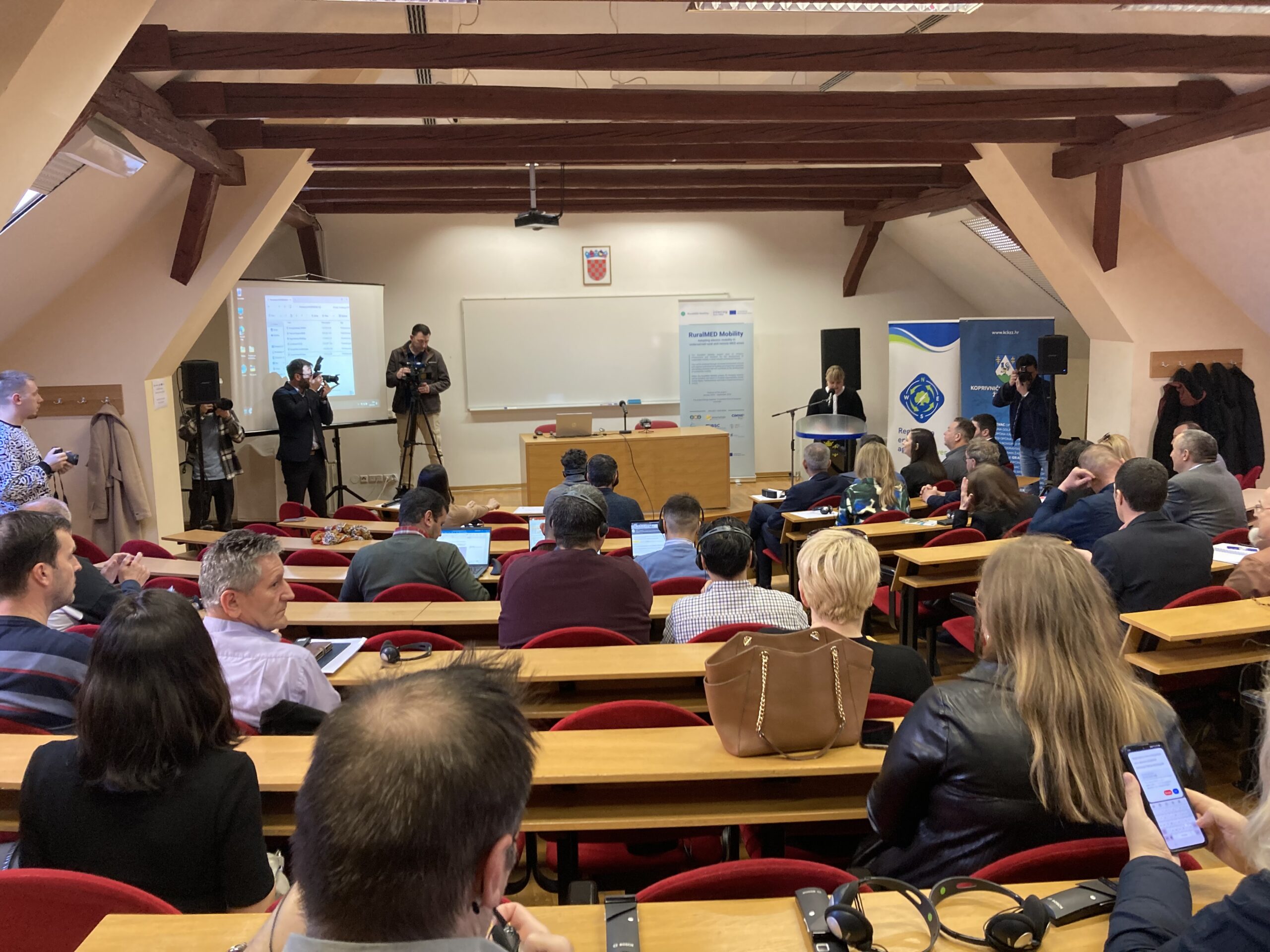

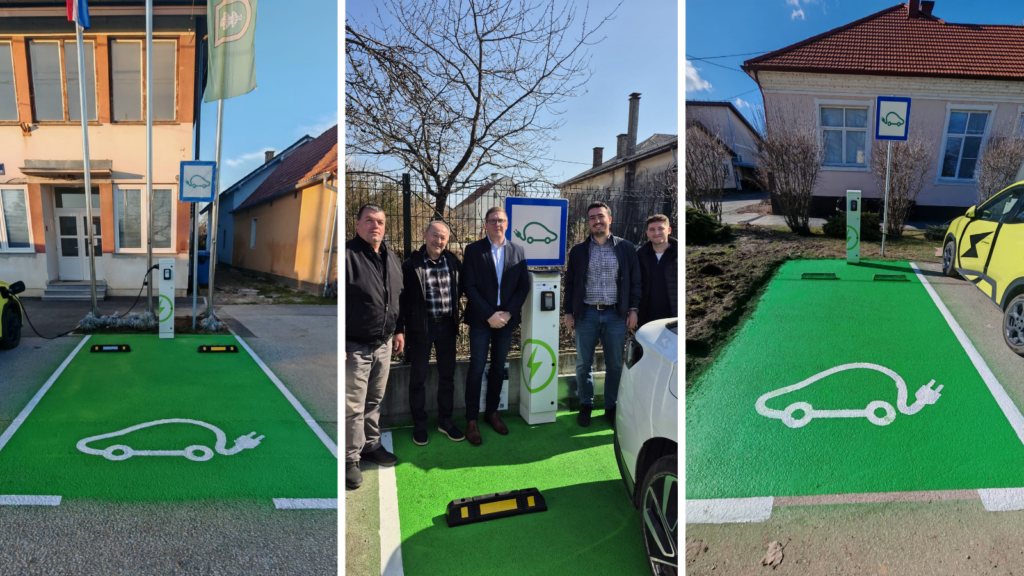
In the rural north of Croatia, a new public electric vehicle charging network is beginning to transform local mobility. As part of the RuralMED Mobility project, four public EV charging stations have been installed at Health Centres in the municipalities of Gornja Rijeka, Kalnik, Gola and Ferdinandovac, all located in Koprivnica-Križevci County. The pilot is jointly implemented by the Regional Energy Agency North (REAN) and Koprivnica-Križevci County (KCKZ), with the stations becoming fully operational at the end of December 2025 and the first charging session recorded on 25 February 2026.
Health Centres were deliberately selected as host sites because they are among the most frequently visited public buildings in these rural communities, ensuring high visibility and accessibility. Each location also represents a different mobility context: from Kalnik’s seasonal tourism to Gola’s proximity to the Hungarian border, Ferdinandovac’s location along the D2 road corridor and Gornja Rijeka as a low-density rural benchmark.
Results
Between 25 February and 30 May 2026, during the first 95 days of operation, the four charging stations delivered 914.21 kWh of electricity across 49 charging sessions, avoiding an estimated 1,010 kg of CO₂ emissions – equivalent to around 540 euros in fuel costs.
Every charging station recorded real user activity and all charging sessions were completed successfully, confirming the reliability of both the equipment and the monitoring platform. Usage has also increased steadily over the reporting period. Energy delivered grew by around 2.5 times compared with the March-April period, driven mainly by strong demand at the stations in Gornja Rijeka and Kalnik, which together account for almost 97% of all electricity supplied so far.
Another interesting finding is that almost a quarter of all charging sessions took place overnight, confirming that standard AC charging fits well with the longer parking times typical of rural areas. Friday is the network’s busiest day, as users top up their batteries ahead of weekend travel.
Impact beyond the numbers
The pilot was designed to make electric mobility as simple and accessible as possible: any electric vehicle equipped with a Type 2 connector can charge free of charge, without registration, RFID cards or subscriptions, during the project and beyond it. This “walk up and plug in” approach, combined with locating the charging stations at places residents already visit regularly, highlights one of the pilot’s main lessons: electric mobility infrastructure is most effective when it becomes part of people’s everyday routines.
The first months of operation have also shown that infrastructure alone is not enough. While all four charging stations are already being used, differences in demand between locations confirm that local awareness, visibility and community engagement are key factors for accelerating the adoption of electric mobility in rural areas.
Beyond the charging infrastructure itself, the project has also demonstrated an effective governance model. By combining Koprivnica-Križevci County’s procurement capacity with REAN’s technical expertise under a single turnkey contract covering design, construction, signage and maintenance, the partners significantly reduced the administrative burden that often prevents small rural municipalities from investing in similar infrastructure. This collaborative approach is already attracting interest from other local authorities looking to replicate similar investments.
Next steps
Looking ahead, the project team expects the Gola and Ferdinandovac stations to gradually converge toward the usage levels already seen in Gornja Rijeka over the next 12 to 18 months, supported by targeted local engagement activities such as information days and test drives. A full replication toolbox – including a joint methodology, tender specifications, a 30-year right-of-construction template and a climate-proofing checklist – is now ready to support the roll-out of similar charging points across other municipalities in Koprivnica-Krizevci County and comparable rural territories across the Mediterranean.