
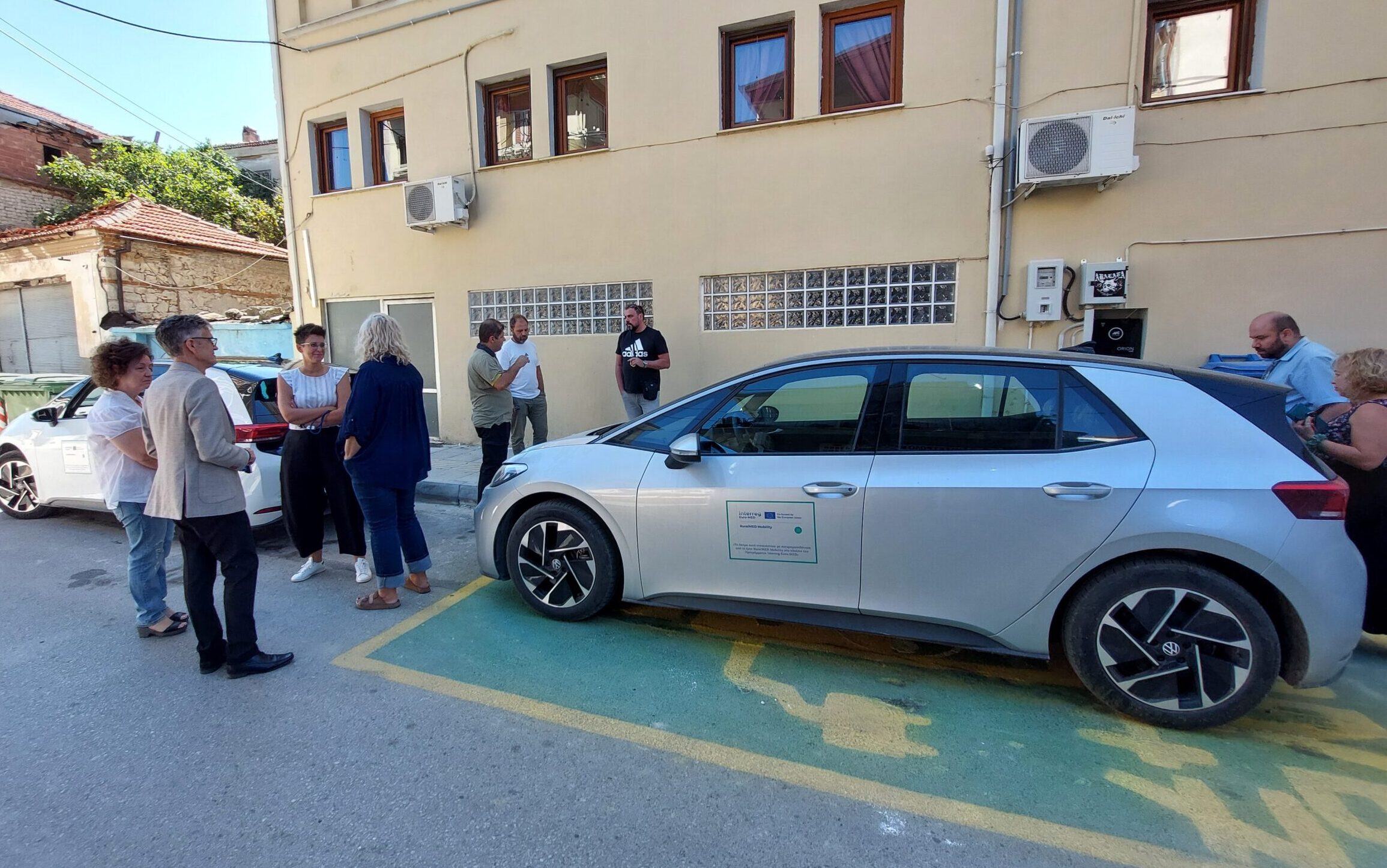
The Greek pilot of RuralMED Mobility has demonstrated how electric vehicles can support the day-to-day operation of public services in rural areas. Between May 2025 and June 2026, two use cases in Western Macedonia completed 373 journeys, covering a total of 28,782 km and achieving an estimated reduction of 2,589 kg of CO₂ emissions.
The pilot involved the Technical Service of the Region of Western Macedonia and the Help at Home service of the Municipality of Amyntaio. Both services used Volkswagen ID.3 electric vehicles, supported by dedicated charging infrastructure and the project’s monitoring platform.
Two services, different mobility needs
The two use cases demonstrated how electric mobility can respond to different operational requirements.
The Technical Service of the Region of Western Macedonia completed 158 journeys, covering 20,331.53 km. Its vehicle was used for longer and more varied journeys across the region, recording an average energy consumption of 13.3 kWh per 100 km and an estimated reduction of 1,854 kg of CO₂ emissions.
Meanwhile, the Municipality of Amyntaio’s Help at Home service completed 215 journeys, covering 8,450.96 km. With its shorter, more repetitive local routes, the service recorded an average consumption of 14 kWh per 100 km and an estimated reduction of 735 kg of CO₂ emissions.
Across both use cases, the vehicles recorded 191 charging sessions, consuming a total of 7,062.61 kWh of electricity.
From operational data to practical experience
Beyond the figures, the pilot gave drivers and public-service staff practical experience of operating electric vehicles, managing charging and monitoring fleet use through digital tools.
The experience also provided the participating public authorities with real-world data to inform future decisions on fleet planning and the potential integration of electric vehicles into public services. The different travel patterns observed in the two use cases highlighted the importance of assessing local needs when introducing electric mobility solutions.
Supporting replication in rural areas
The next step is to consolidate the operational and monitoring data and share the lessons learned with municipalities and regional authorities. The Greek partners highlight several factors to consider when replicating similar initiatives: understanding travel needs, choosing suitable vehicles and charging infrastructure, ensuring compatibility between vehicles and digital systems, training staff, and clearly assigning responsibilities for operation and maintenance.
These findings can help public authorities assess how electric vehicles and charging infrastructure could be introduced more widely across Western Macedonia and other rural Mediterranean territories, depending on local needs, institutional commitment and available funding.
The Greek experience is one of seven pilot actions implemented through RuralMED Mobility, a project led by the Extremadura Energy Agency (AGENEX) that brings together 13 partners from eight countries to explore more sustainable mobility solutions for rural and remote areas across the Mediterranean.